The week started off with a bus trip up to Eleverum, the location of another Hedmark University College campus and also of the Namibia House, headquarters of the Namibia Association of Norway, where I'll be doing my field study/internship.
First stop: Namibia Huset
We met with a lady (whose name I think is Birgit Anderson ?) who does Networking and information and organizes internships for Norwegian students to Namibia. She gave us a LOT of info about the Namibia House and some of their projects; so for those of you interested in knowing more about where I'm going to be doing my field study...
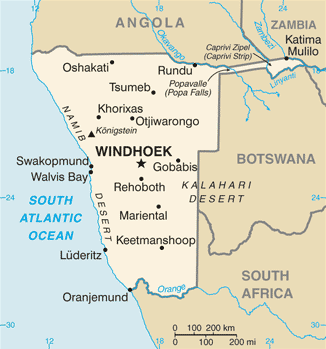
The Namibia Association (NAMAS) was started in 1980 by a priest in Norway who came to know of all the people living in exile and poverty in Namibia because of the South African colonization that was taking place. So he and some others that he "gathered", so to speak, started a campaign to send resources and goods to those people in need. This actually became quite successful, so they kind of established NAMAS as a small association. Then the Norwegian Foreign Ministry heard about it and they contributed a LOT of money to them through NORAD, the Norwegian Aid directorate. Eventually they got money from other places, too such as "Operation Day's Work", where the local high schools get money to choose a service organization that they want to give that money to, and then they volunteer there and learn about it and donate their money. (I thought that was pretty cool..)
NAMAS, even though they are funded partially by the government, is still an NGO (Non-government Organisation). They work and cooperate with the authorities in Norway and Namibia, but they don't affiliate themselves with politics at all; they work simply for the people...Love it.
Right now 2 of their biggest projects are with the Indigenous Himba people. There were real problems for these people because of how they live and dress--they are a nomadic people, basically. The kids didn't like going to school, because they were Himbas, they would be beaten up and raped on the way to school, big mess, who would want to go to school then? So NAMAS created a school for them, which is actually Namibia's largest primary school. It's a mobile school, and the teachers live in tents and move with the school, but it isn't really THAT mobile, it stays near villages so children don't have to walk as far. Since the school is so popular, the Himba people have requested that NAMAS start more schools; so currently (this week even) NAMAS people were down in Namibia talking to authorities and checking to see if it would even be possible to build a school on the Angola (bordering Namibia to the North) side of the Himba population.
One thing they have to keep in mind about these schools is that for the people, it would be pointless for their children to go to school if they don't get fed there, because they have to work to eat, so you don't work and go to school, you don't eat. So for a lot of the students at these schools, the school meal is the only meal they get all day.
It is really interesting, because these people have been so primitive and nomadic for so many years, they don't know what it is to have education; they don't know what that implies. It's so far from their lifestyle that some want to isolate themselves from the "other world". Another hard thing for the Himba people is working with the government that they are under. The numbers of these people is HUGE. (they didn't know how many there were until a NAMAS representative went down and counted them and found out that there were WAY more people than the government originally estimated.)
And among these people, they speak 4 different languages--So how do they represent themselves as one people before a government? Or organize a spokesmen to present the opinions of the population?
It's really interesting. The projects sound incredible, and I am REALLY excited to start my field study there. So what would I be doing there exactly? Well, as I understand it: whatever I want! There is a shop in the Namibia house that is all volunteer, and all proceeds go to the Association, so I could work there. There is also an international information center, that they are trying to get people aware of by organizing events and speakers and such, so I might get to help organize a project or brainstorm ideas for projects there. Also, just learn the ropes of what they do there day to day, spend some time researching and learning more about their projects.
I'm really excited I can't wait to start!!
So Next stop: Glomdalsmuseet
This is a museum dedicated to the Romani/Taters/Travelling people in Norway. Similar to the gypsies, they are unsettled people, and travel around Norway and make their handicrafts, and that's how they live.
They underwent a lot of discrimination by the government up until the late 1980s. The problem was, that because they were not settled, the government had a hard time taxing them, so they tried to do everything they could to make them a settled people. They would take the children away from their parents and put them into real "Norwegian" homes, and make them go to the Norwegian schools. They would also force the families into government homes, and not allow them to have any contact with their relatives or any other travelling people as an attempt to force them into Norwegian Society. These people have their own languge, Romani, and they were forbidden to use that language. Also they made it illegal for the travelling people to own horses, which until the 1950s was their only means of transportation and living. There was a lot of other information about the Travelling people, that, because I have a hard time paying attention at museums I don't really recall everything.
Anyway, it was very interesting to learn about the discrimination that actually went on in Norway towards these people. There was a lot of unjustified fear of them, because of rumors and myths about them. Our professor talked about when she was a student she had dark hair and dark eyes, and one time she travelled through the forest conducting interviews for some research she was doing. And she came to one house and knocked on the door, and no one answered, so, since she had a lot of time, she sat down on the doorstep and waited. And after a while, the door opened, and she got up and introduced herself to the man at the door, and said what she was doing, and he said, "Oh, we thought you were a Tater, and that you had a man with you waiting in the car who wanted to do us harm!"
So, there's another interesting piece of Norwegian history.
That was basically the summary of our day in Oslo, after visiting the museum, we jumped a train back to Hamar so we could go home and work on our homework.
I'll post the info from Oslo probably tomorrow, so there isn't SO MUCH to read all at once! This weekend I just have to finish my 3rd assignment: an essay on the Norwegian national government, and pack up for the excursion next week! So I'll space out the posts a bit.
As for bar tending: A couple of us in the group signed up to volunteer at the student pub, and the first meeting was on Thursday night; I ended up coming home on Thursday and sleeping though, because I didn't feel well. A couple of people have signed up for times to work, and they still need more people, so I might end up working there eventually--could be fun ;)
So...I'm off to finish a paper! Maybe I'll post my assignment later in case anyone is interested in the Norwegian National Government system ...


Ingen kommentarer:
Legg inn en kommentar